Andrean’s Recovery From Tornado Damage to Reopening
Built to Respond: How Tonn and Blank Helped Andrean Recover
When tornado damage disrupts and devastates a school, the construction response cannot wait.
On June 11, 2026, an EF-2 tornado moved through Merrillville, Indiana, causing significant damage across the community and leaving Andrean High School facing a difficult question: could the school reopen in time for the 2026-27 academic year?
The answer depended on how quickly the damage could be understood, how safely the building could be stabilized, and how much restoration work could happen at the same time. With students and teachers scheduled to return in August, Andrean had roughly 55 days to move from emergency response to a functioning school.
Tonn and Blank Construction mobilized within hours.
Tornado Damage Restoration Efforts Against the Clock
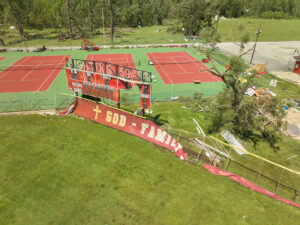
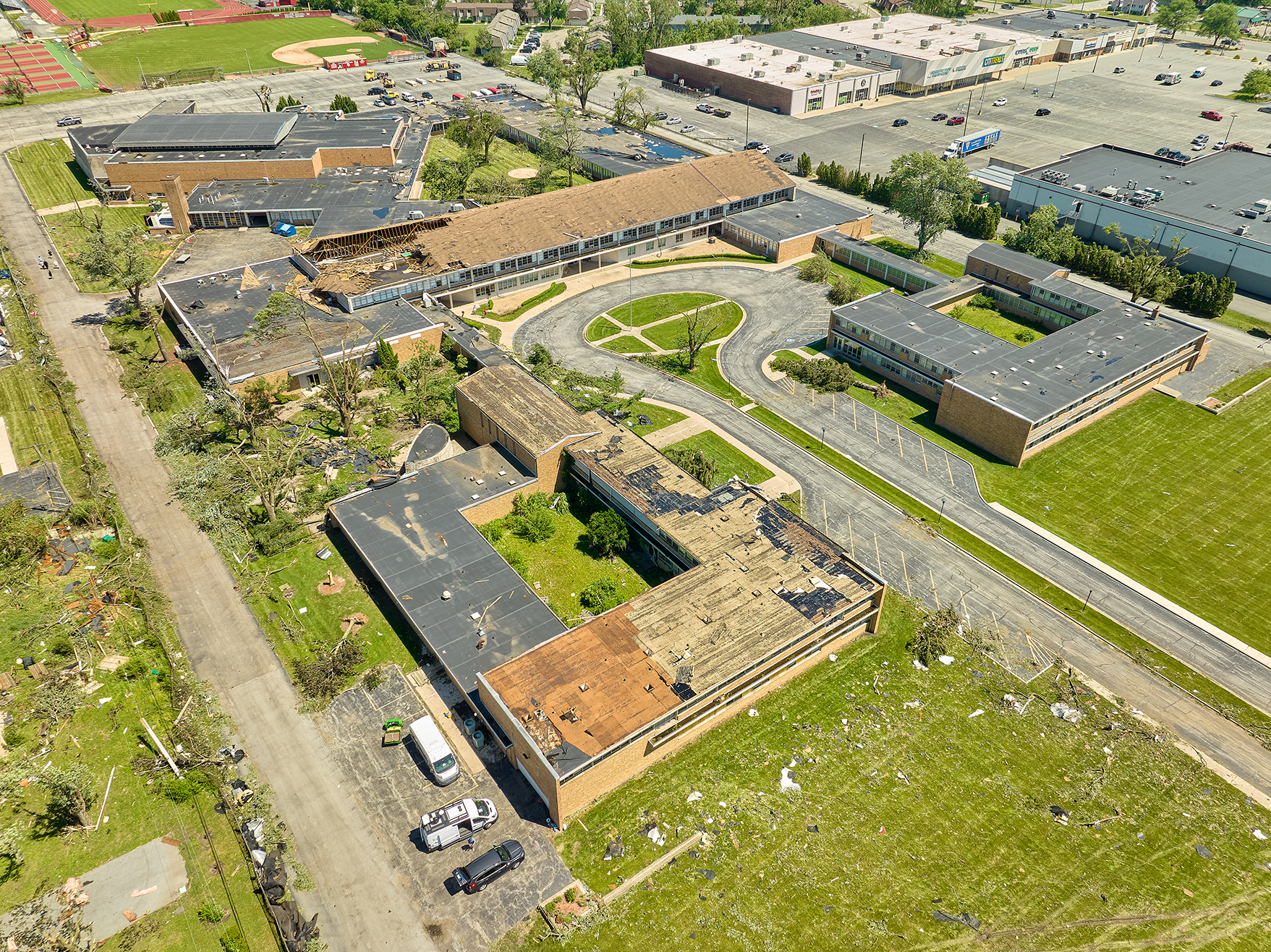
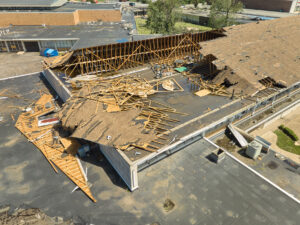
The tornado damaged roofing, structural components, mechanical equipment, electrical systems, plumbing, interiors and athletic facilities. Water entered the building, creating additional damage and introducing environmental concerns that had to be addressed before reconstruction could move forward.
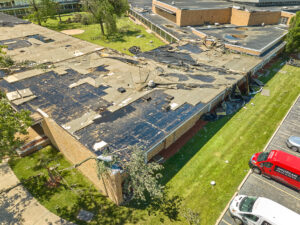
The roof quickly became one of the project’s most significant challenges. Once damaged areas were opened, crews found extensive moisture within the existing roof assembly and additional damage beneath the displaced truss system. Gas leaks, damaged building systems and unforeseen conditions continued to emerge as demolition exposed areas that could not be fully evaluated from the surface.
At the same time, the school could not simply be treated as a construction site. Every decision had to account for the safety of students and staff who would soon return to the building.
Mobilizing Resources to Keep Recovery Moving
Tonn and Blank organized the recovery around the school’s August reopening date. Self-perform crews handled critical demolition, cleanup, moisture mitigation, carpentry and roofing work, allowing the team to respond directly to changing conditions and keep multiple areas moving.
The project operated across shifts throughout the week, with trade partners working in coordinated phases. As one area moved through environmental abatement, another could advance through demolition, roofing, mechanical repairs or reconstruction.
That sequencing mattered. The project could not afford to wait for one trade to finish before the next began.
Environmental work required particularly careful coordination. Asbestos-containing materials were identified and abated in phases, with air monitoring and clearance testing used to verify that areas were safe before they returned to construction or school use. Additional materials were discovered as demolition progressed, requiring the team to adjust the work plan without losing sight of the reopening schedule.
Safety guided the work sequence from the beginning. The team built safety measures into daily construction planning. Temporary lighting and GFCI protection supported crews without permanent building systems. Workers maintained containment during environmental work and managed debris and equipment movement. The team also coordinated inspections and occupancy requirements with local officials. These efforts helped portions of the campus transition safely toward normal use.
Solving Problems as They Surfaced
The recovery required more than repairing visible tornado damage. Roof investigations uncovered saturated materials beneath the damaged trusses. Rather than simply replacing the surface, the team addressed the underlying condition and developed a permanent roofing solution.
Building systems required similar attention. Electrical crews evaluated damaged lighting and temporary power needs. Mechanical crews repaired gas leaks and replaced damaged rooftop equipment. Plumbing crews investigated roof drains and vent piping, including the addition of roof overflows needed to meet code requirements and support the new roofing system.
The same approach extended to the campus outside the building. Damaged fencing, sidewalks, athletic facilities, lighting, trees and site infrastructure required repair or replacement as the school prepared to return.
School Ready for Students & Staff
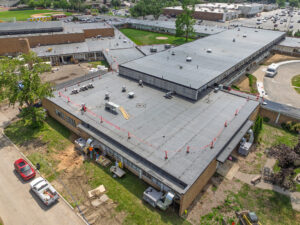
By early August, the major phases of environmental abatement had been completed and passed required air sampling. Permanent roofing was substantially complete, building systems were being restored, classroom and administrative areas were moving through final finishes, and occupancy permits had been secured for the restored phases.
Teachers returned to prepare classrooms. Furniture and technology moved back into completed areas. Final cleaning and site work continued as the campus transitioned from an active recovery site back into a functioning school.
Andrean welcomed students back for the start of the school year on August 17, 2026, within the narrow window established after the tornado damage.
The work at Andrean shows what emergency construction requires. The team needed to repair a damaged facility under an immovable deadline. The challenge involved creating a safe path back to school. Conditions continued to change, but the academic calendar could not. Tonn and Blank brought self-perform crews, trade relationships and construction management experience together. The company also committed field resources to the accelerated recovery effort.
For Andrean, the result was more than a coordinated path back to campus. It meant preserving the opportunity for students to return to the activities that make a school a community. The 59ers will host the annual Battle of Broadway against Merrillville for the first time since the rivalry began in 2009, with kickoff remaining on its scheduled date and time as Merrillville works to restore power. Just weeks earlier, there was real discussion about whether Andrean would have a football season at all. Without the speed, coordination and execution of the recovery effort, the game, and potentially the season, would not have been possible.
Students and staff returned while permanent repairs continued beyond reopening. For school leaders facing an unexpected facility emergency, the lesson is practical. Quick response matters, but resources and coordination matter just as much. The right people and trade relationships help keep work moving. Strong field capabilities help teams adapt when the plan inevitably changes—and, in Andrean’s case, helped make it possible for the school community to get back to doing what it does best.